
💰 Cloud Economics Unlocked: The Ultimate Money-Saving Guide for Smart Teams in 2025
Welcome back to Cloud City, where today we’re diving into everyone’s favorite topic: money! Ever opened your cloud bill and felt like you’d been struck by lightning? You’re not alone. The average organization wastes 30% of their cloud spending, but here’s the exciting part—that means there’s a treasure trove of savings waiting to be discovered!
In 2025, global cloud spending is expected to hit $723.4 billion, and with most organizations saying cost management is their biggest challenge, mastering cloud economics isn’t just smart—it’s essential. Ready to turn your cloud bills from scary to sensible? Let’s unlock the secrets of cloud economics together!
🎯 First stop on our money-saving adventure: understanding where all those dollars actually go…
🔍 Cloud Cost Archaeology: Digging Into Your Bill
Think of your cloud bill like a restaurant receipt after a big group dinner. At first glance, it just shows a big scary total. But when you break it down line by line, suddenly everything makes sense. Cloud costs work the same way—they’re made up of several key ingredients that combine to create your monthly bill.
The beauty of cloud economics lies in its pay-as-you-go model. Unlike traditional IT where you buy expensive equipment upfront, cloud computing lets you pay only for what you use. It’s like switching from owning a car (with insurance, maintenance, and parking) to using ride-sharing services—you only pay when you actually need to go somewhere.
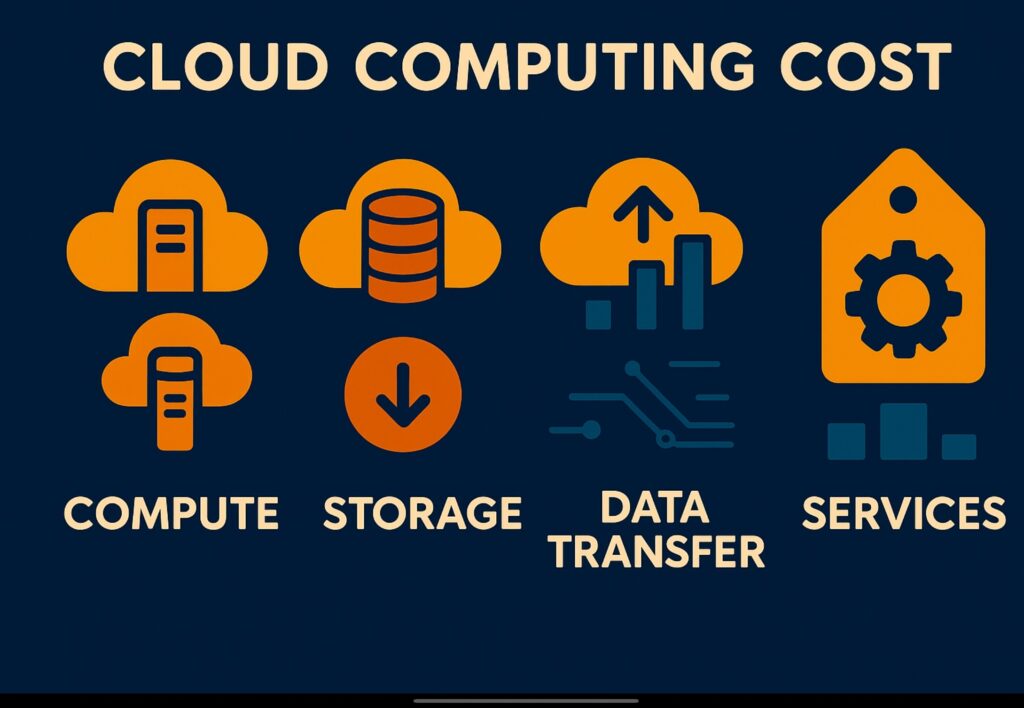
🏗️ The Big Four: Where Your Money Goes
💻 Compute Costs (The Engine Room):
This is your biggest expense, typically 60-80% of your bill. Think of it as renting digital horsepower. Virtual machines, containers, and serverless functions all fall here. The good news? This is also where you have the most control and biggest savings opportunities.
💾 Storage Costs (The Digital Warehouse):
Every file, database, and backup costs money to store. Hot data (frequently accessed) costs more than cold data (rarely accessed). It’s like choosing between a premium storage unit downtown versus a basic one in the suburbs.
🌐 Data Transfer (The Shipping Fees):
Moving data between regions, availability zones, or out to the internet incurs charges. These can sneak up on you faster than shipping costs on an online order! Most providers offer free inbound data transfer but charge for outbound.
🛠️ Additional Services (The Add-Ons):
Databases, load balancers, monitoring tools, and third-party software licenses. These are like the extras at a movie theater—individually small but they add up quickly.
💡 Now that we know what we’re paying for, let’s explore the different ways cloud providers charge for these services…
🎪 The Cloud Pricing Circus: Understanding Your Options
Cloud pricing can feel like a three-ring circus with different acts happening simultaneously. But once you understand the main performance styles, choosing the right option becomes much easier. Let’s meet the main performers in our cloud pricing show!
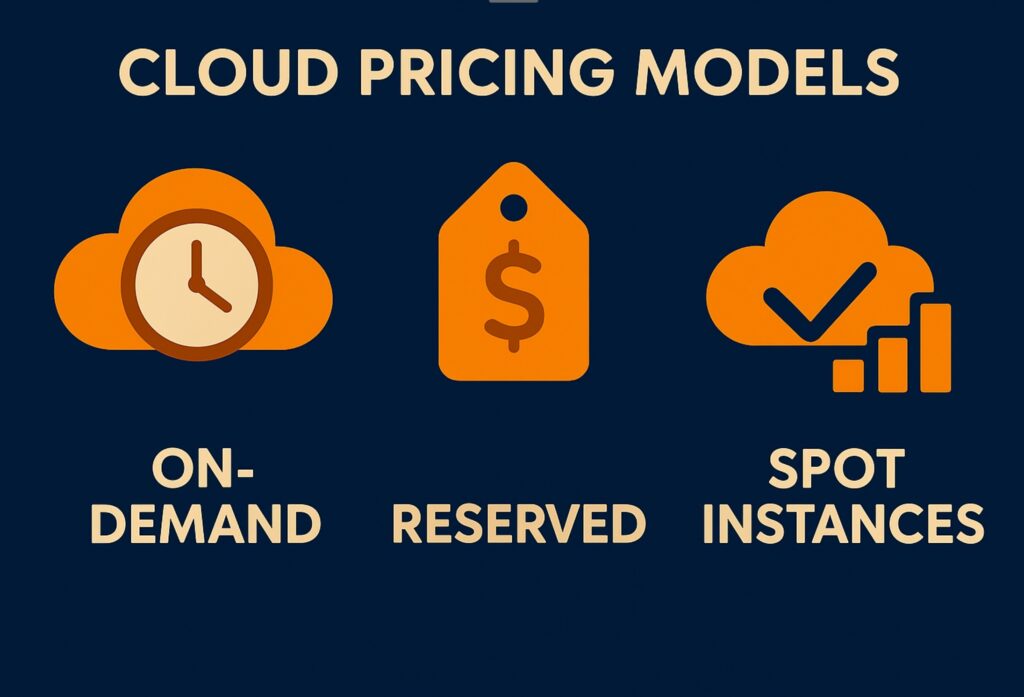
🍵 On-Demand: The Pay-As-You-Go Café
Imagine walking into a trendy café where you only pay for the exact minutes you sit at a table. That’s on-demand pricing! You get maximum flexibility—start and stop resources anytime, no commitments required. Perfect for unpredictable workloads, testing new ideas, or when you’re just getting started.
The trade-off? It’s the most expensive option per hour. But here’s the thing—sometimes paying premium for flexibility is exactly what your business needs.
🏋️ Reserved Instances: The Gym Membership Deal
Just like gym memberships, reserved instances offer better rates when you commit upfront. Pay for 1-3 years in advance and save 30-70% compared to on-demand pricing. AWS offers up to 72% savings with their savings plans, while Azure and Google Cloud provide similar discounts.
💪 Reserved Instance Impact:
Companies typically save 40-60% on compute costs by strategically using reserved instances for predictable workloads. That’s like getting your gym membership for half price!
⚡ Spot Instances: The Flash Sale Hunter
Spot instances are the flash sales of cloud computing. You can save up to 90% off on-demand prices, but there’s a catch—your instances can be interrupted when demand spikes. Perfect for flexible workloads like batch processing, testing, or development environments that can handle interruptions.
Think of it like standby airline tickets. Huge savings, but you need to be flexible with timing!
🔧 Understanding pricing models is great, but let’s dive into the real magic—proven strategies to slash your cloud bills…
🎯 The Money-Saving Playbook: Proven Cost Optimization Strategies
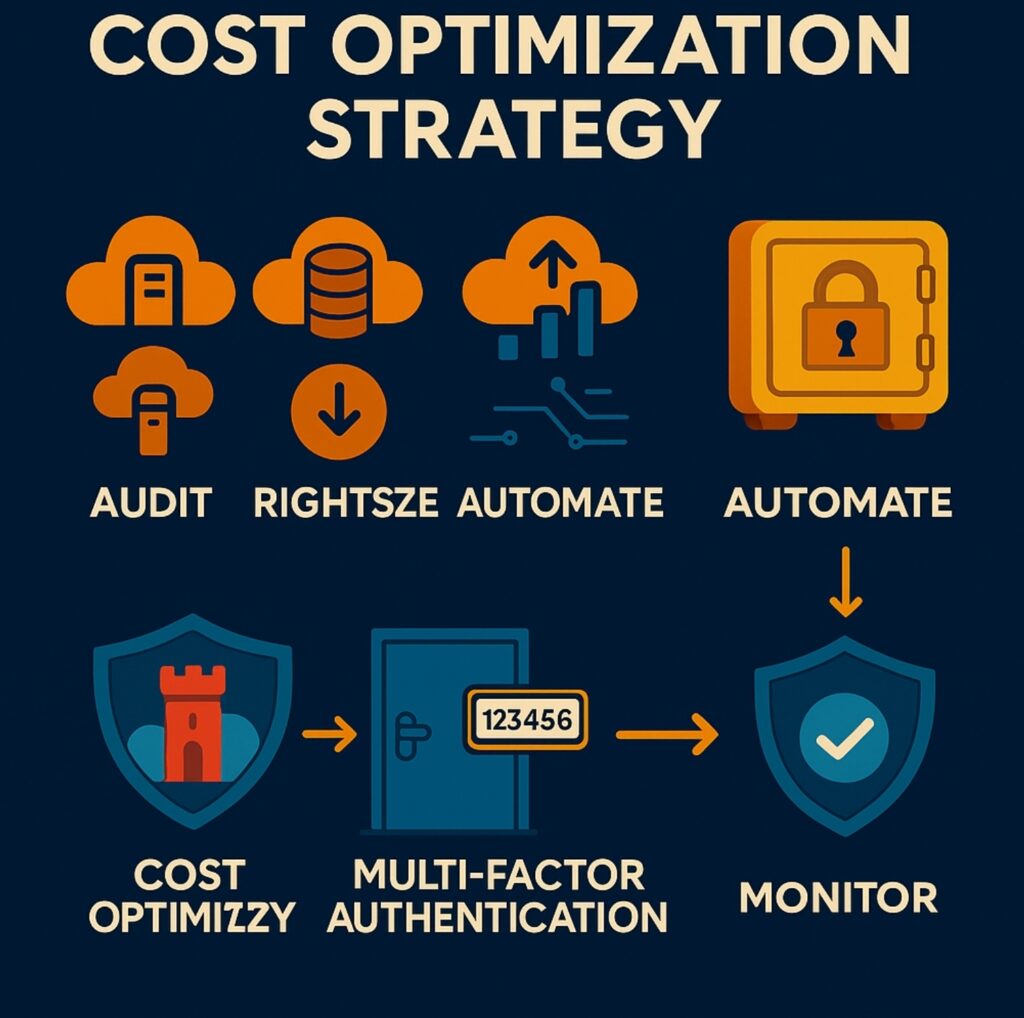
Ready for the good stuff? These are the battle-tested strategies that top companies use to keep their cloud costs under control. Organizations implementing these practices typically reduce their cloud spending by 20-40%.
🎯 Strategy #1: The Rightsize Revolution
Rightsizing is like Goldilocks finding the perfect porridge—not too hot, not too cold, but just right. Many organizations overprovision resources “just in case,” leading to massive waste. AWS Compute Optimizer and similar tools can automatically recommend the perfect instance sizes for your workloads.
🎪 Real-World Success Story: A software company reduced their AWS bill by 40% simply by rightsizing their instances and cleaning up old test environments weekly. No magic tricks, just smart housekeeping!
⏰ Strategy #2: The Scheduling Superhero
Why keep development and testing environments running 24/7 when developers only work 8-10 hours a day? Automated scheduling can reduce non-production costs by up to 70%. It’s like turning off the lights when you leave the room—simple but effective!
🏷️ Strategy #3: The Tagging Detective
Proper resource tagging is your secret weapon for cost accountability. Tag everything with project names, departments, and cost centers. Without tags, tracking spending is like trying to solve a mystery with no clues.
🚨 Tagging Best Practices:
- Use consistent naming conventions across your organization
- Include cost center, project, environment, and owner tags
- Automate tagging through infrastructure-as-code tools
- Set up budget alerts based on tag combinations
🤖 Strategy #4: The Automation Advantage
The most successful organizations automate their cost optimization. Auto-scaling adjusts resources based on demand, while automated cleanup removes unused resources. It’s like having a personal assistant who constantly optimizes your spending without you having to think about it.
📈 These foundational strategies are powerful, but let’s explore what’s trending in cloud economics for 2025…
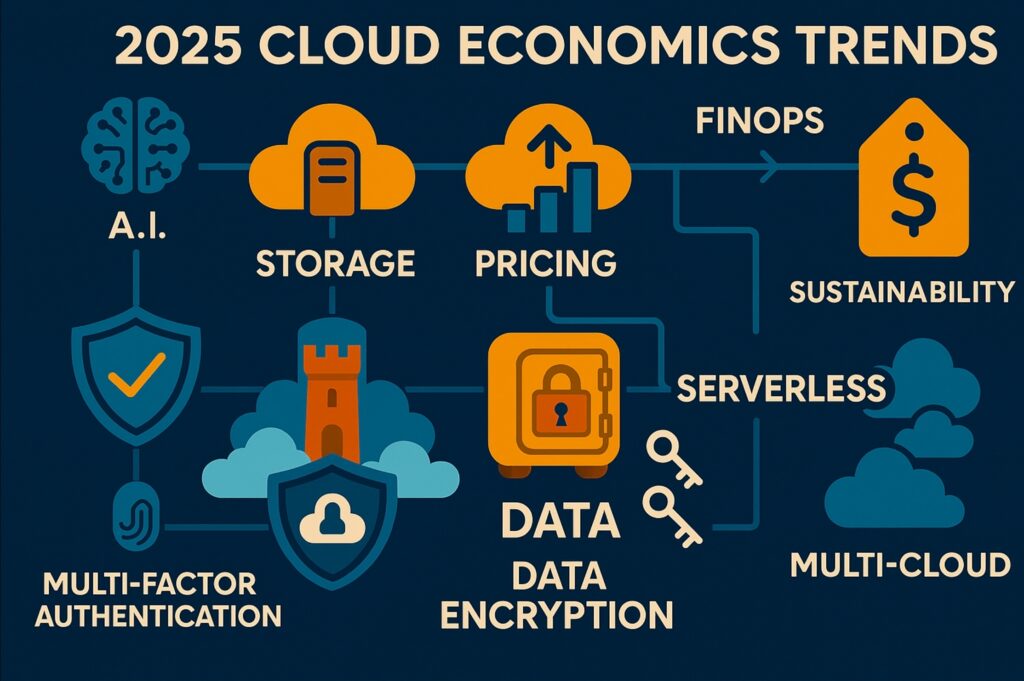
🚀 2025 Cloud Economics Trends: What’s Hot Right Now
The cloud economics landscape is evolving rapidly, and staying ahead of trends can give you a significant competitive advantage. Based on the latest industry reports and surveys, here’s what’s shaping cloud spending in 2025.
🧠 Trend #1: AI-Powered Cost Optimization
Artificial intelligence is revolutionizing how we manage cloud costs. AI-powered tools can now predict spending patterns, automatically optimize resource allocation, and identify savings opportunities that humans might miss. Over 60% of organizations are using AI to enhance their cost management capabilities.
“AI is transforming FinOps from reactive cost management to predictive cost intelligence. We’re seeing customers reduce their cloud bills by 25-30% using AI-driven optimization.”
— Cloud Economics Expert, 2024
📊 Trend #2: The FinOps Revolution
FinOps (Financial Operations) has moved from buzzword to business necessity. Over 50% of organizations now have dedicated FinOps teams. This cross-functional approach brings together engineering, finance, and business teams to optimize cloud spending collaboratively.
🎯 FinOps Impact by the Numbers:
- Organizations with mature FinOps practices waste 20% less on cloud spending
- 75% of companies say cost optimization is their top cloud priority in 2025
- FinOps teams typically deliver 15-25% in cloud cost savings within the first year
🌱 Trend #3: Sustainability Meets Economics
Green cloud computing is no longer just about being environmentally responsible—it’s becoming economically smart. Cloud providers are offering carbon-efficient regions and sustainable computing options that often cost less than traditional alternatives.
📱 Trend #4: Serverless and Container Dominance
Over 75% of companies are using serverless computing in 2025 for both agility and cost savings. Serverless functions automatically scale to zero when not in use, meaning you literally pay nothing for idle time. It’s the ultimate pay-for-what-you-use model!
☁️ Trend #5: Multi-Cloud Cost Management
With over 80% of enterprises adopting multi-cloud strategies, managing costs across multiple providers has become crucial. The challenge isn’t just about comparing prices—it’s about optimizing workload placement for the best cost-performance ratio.
🛠️ Understanding trends is exciting, but let’s get practical. Here’s your step-by-step action plan to start saving money today…
🎬 Your Cloud Cost Optimization Action Plan
Ready to put everything into action? Here’s your proven roadmap to cloud cost optimization success. This plan has helped thousands of organizations reduce their cloud spending while improving performance.
🏃♀️ Phase 1: The Quick Wins (Week 1-2)
🎯 Immediate Actions for Instant Savings:
- Inventory Audit: Use native cloud tools (AWS Cost Explorer, Azure Cost Management, GCP Cost Intelligence) to see where money goes
- Identify Idle Resources: Find unused EC2 instances, unattached EBS volumes, and forgotten load balancers
- Set Up Budget Alerts: Create alerts at 50%, 80%, and 100% of your monthly budget
- Quick Resource Cleanup: Delete obviously unused resources (old snapshots, test instances left running)
- Enable Instance Scheduling: Turn off non-production resources during nights and weekends
🏗️ Phase 2: Building Your Foundation (Month 1)
- Implement Comprehensive Tagging: Tag all resources with cost center, project, environment, and owner information
- Rightsize Running Instances: Use rightsizing recommendations to optimize instance types and sizes
- Purchase Strategic Reservations: Buy reserved instances for predictable, steady-state workloads
- Set Up Cost Allocation: Create reports that show spending by team, project, and business unit
- Establish FinOps Team: Form a cross-functional team including finance, engineering, and operations
🚀 Phase 3: Advanced Optimization (Ongoing)
- Implement Auto-Scaling: Set up automatic scaling based on demand patterns
- Leverage Spot Instances: Use spot instances for batch processing and development workloads
- Optimize Storage Tiers: Move infrequently accessed data to cheaper storage classes
- Monitor and Adjust: Regular monthly reviews and continuous optimization
- Advanced Analytics: Use machine learning tools for predictive cost optimization
🎯 Success Metrics to Track
- Cost per Customer/User: Track unit economics improvement
- Resource Utilization: Aim for 70-85% average utilization
- Reserved Instance Coverage: Target 60-80% coverage for steady workloads
- Monthly Cost Variance: Keep month-to-month variations under 10%
- Cost Allocation Accuracy: Achieve 95%+ cost allocation to business units
🏆 Let’s wrap up with the key principles that separate cloud cost optimization winners from everyone else…
🌟 The Cloud Economics Success Formula
After analyzing countless success stories and industry best practices, the organizations that master cloud economics all follow similar principles. Here’s your blueprint for long-term success:
🔑 The Five Pillars of Cloud Cost Mastery:
- Visibility First: You can’t optimize what you can’t see. Invest in comprehensive cost visibility and reporting
- Culture of Accountability: Make cost awareness everyone’s responsibility, not just the finance team’s
- Automation Excellence: Automate routine optimization tasks to maintain savings without constant manual work
- Continuous Improvement: Cloud optimization is a journey, not a destination. Regular reviews and adjustments are essential
- Business Alignment: Always tie cost optimization decisions back to business value and objectives
💎 The Golden Rules of Cloud Economics
Remember these timeless principles as you optimize your cloud spending:
- Start Small, Think Big: Begin with quick wins and build momentum for larger optimization projects
- Measure Twice, Cut Once: Always test optimization changes in non-production environments first
- Balance Cost and Performance: The cheapest option isn’t always the best if it hurts user experience
- Plan for Growth: Choose solutions that scale efficiently as your business grows
- Stay Informed: Cloud pricing and services evolve rapidly—keep learning and adapting
🚨 Avoid These Common Pitfalls:
- Over-optimizing at the expense of reliability or performance
- Focusing only on compute costs while ignoring storage and data transfer
- Making cost decisions in isolation without considering business impact
- Setting up optimization processes but failing to maintain them
- Choosing reserved instances without analyzing actual usage patterns
🎊 Congratulations! You’re now equipped with the knowledge and tools to master cloud economics like a pro…
🎉 Your Cloud Economics Journey Continues!
You’ve just completed a comprehensive tour through the exciting world of cloud economics! From understanding basic pricing models to implementing advanced cost optimization strategies, you now have the knowledge and tools to transform your cloud spending from a source of anxiety into a competitive advantage.
Remember, mastering cloud economics isn’t about finding the absolute cheapest options—it’s about finding the optimal balance of cost, performance, and business value. With global cloud spending reaching new heights in 2025, those who master these principles will have a significant advantage in the marketplace.
🚀 Your Next Steps to Cloud Cost Mastery:
- Start Today: Implement the Phase 1 quick wins this week
- Build Your Team: Form a cross-functional FinOps team within the next month
- Set Goals: Establish specific, measurable cost optimization targets
- Stay Learning: Cloud economics evolve rapidly—keep learning and adapting
- Share Success: Celebrate wins and share lessons learned with your organization
The cloud revolution continues to accelerate, with AI, edge computing, and serverless technologies creating new opportunities for optimization. By mastering the fundamentals covered in this guide and staying current with emerging trends, you’ll be well-positioned to maximize the business value of your cloud investments.
🌈 Ready for your next adventure? Stay tuned for our upcoming article: “Cloud Careers: Turning Knowledge Into Gold – 2025’s Hottest Cloud Jobs and How to Get Them!”
Keep optimizing, stay curious, and remember: In the world of cloud economics, knowledge truly is power—and power translates directly to savings! Your journey to cloud cost mastery is just beginning, and the best is yet to come! 💰✨